World War 3 - News and Reports

RUSSIA entered the BATTLE amid the Preparation of a Land Invasion of IRAN by the U.S. and ISRAEL

Aired 3rd March 2026. The satellite imagery clearly shows the enormous scale of the damage suffered by American forces in the region. Source: Borzzikman.

Russian Foreign Minister Lavrov on Iran - Those who possess a nuclear bomb are not attacked by the United States

Russia Speaks Out About Israeli-US War with Iran

Russia's Dmitry Medvedev warned that World War III could begin at any moment if Trump continues his regime change policy, adding that a real nuclear conflict would make Hiroshima and Nagasaki look like a sandbox game. Vladimir Putin called the killing of Ayatollah Khamenei a cynical murder violating all norms of human morality and international law. Khamenei is the third Moscow-aligned leader to fall in 15 months after Syria and Venezuela. Despite a 20-year strategic partnership signed in January 2025, the Russia-Iran deal contains no mutual defense clause, and Moscow has offered no military assistance as Iran fights the largest U.S. military operation in the Middle East since 2003. - News Report.

MACRON VS. PUTIN: France Triggers New Nuclear Arms Race in Europe

1 Like

Iran & Hezbollah's Missiles SLAM Israel, Trump PANICS

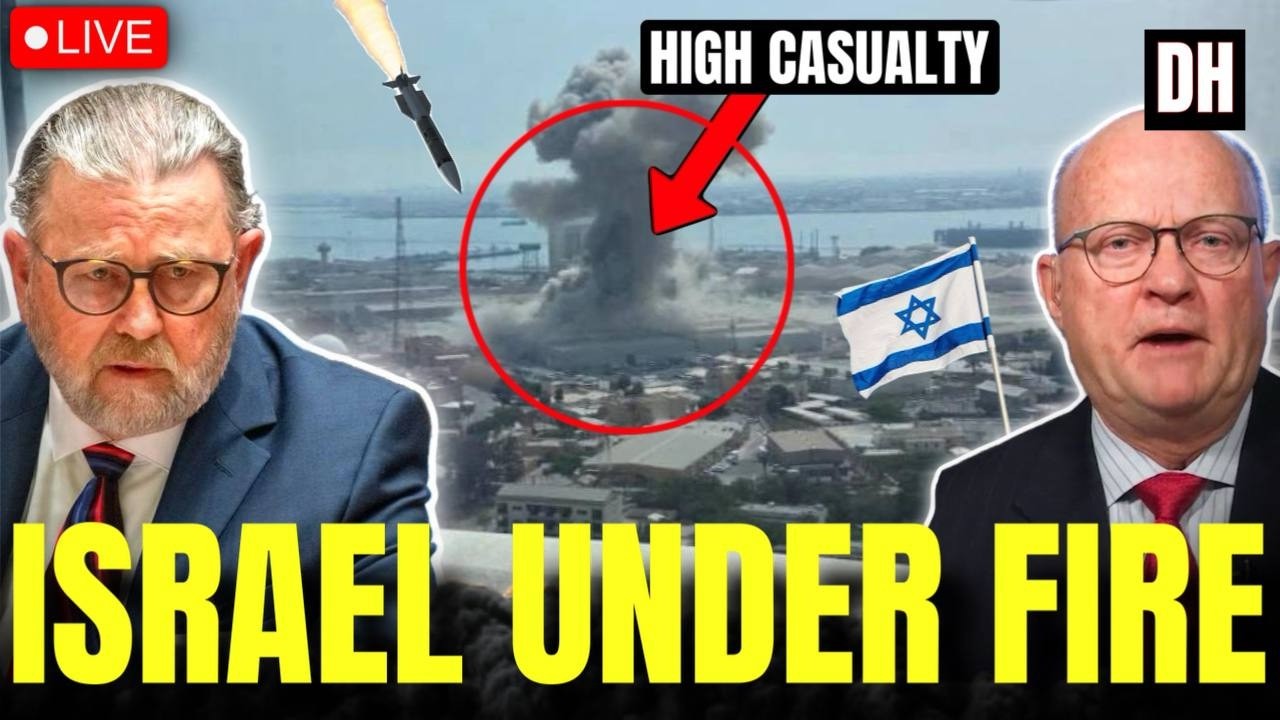
Larry Johnson and Col. Lawrence Wilkerson react to Trump and Israel's war on Iran going fully regional as Hezbollah has entered the field and is coordinating massive missile and drone strikes on Israel with Iran. Trump administration panic is reaching fever pitch as a race against dwindling ammunition and defenses meets Iran's furious retaliation. - D.H.

the urgent development of the Al Jubail industrial city being partially destroyed in Saudi Arabia.

This will set off a global shortage of lubricants, polymers, plastics and supply chain parts.

1 Like

Major Evacuations Across the Middle East

Col. Macgregor: U.S. MAY ATTACK IRAN THIS WEEKEND

Washington continues to escalate tensions with Tehran, attempting to enforce its blockade on Iranian ports. This, as a third U.S. aircraft carrier, more warships and thousands of additional troops are heading toward the Middle East. Ret. U.S. Army Col. Douglas Macgregor said he’s being told that the next U.S. attack on Iran could happen as early as this weekend. But he noted that it won’t have the desired effect or achieve any meaningful military goals, and will only make the situation even worse for the global economy as Iran follows through on its promise to retaliate across the region. - R.B.

Warnings have been given to us for a long time

Today Tass talks about one of them:

25 Apr, 17:30

FACTBOX: Chernobyl nuclear power plant disaster

Since 2004, the CIS member states have observed April 26 as International Day of Remembrance of the Victims of Radiation Accidents and Disasters

© Alexander Polegenko/TASS

TASS FACTBOX. April 26, 2021 marks 35 years since the Chernobyl nuclear power plant disaster (near the town of Pripyat, the Kiev Region of the Ukrainian Soviet Socialist Republic, currently the Vyshgorod district of the Kiev Region of Ukraine). It went down in history as the worst-ever nuclear power plant catastrophe.

Chernobyl Nuclear Power Plant's History

On June 29, 1966, the USSR Council of Ministers issued a decree approving a plan for commissioning nuclear power plants through 1977. The document specifically included the construction of nuclear power plants in Ukraine. One of the sites was selected 4 km from the village of Kopachi and 15 km from the city of Chernobyl, near the Yanov railway station (Chernigov-Ovruch line).

On February 4, 1970, construction began of a new city of Pripyat, 3 km from the future nuclear power plant site, for the plant's maintenance personnel. The city had a projected population of up to 85,000. In May of that year, excavation work began on the site of the foundation for the first power unit.

On August 1, 1977, the first fuel assembly was loaded into Unit 1, which housed an RBMK-1000 nuclear reactor, marking the beginning of its physical startup. The power startup took place on September 26 of that year. On September 9, 1982, the plant experienced its first accident. During a test run of Unit 1 following scheduled maintenance, one of the reactor's fuel channels failed, deforming the graphite stack in the core. No one was injured. The damage from the emergency took approximately three months to eliminate.

The 1986 Disaster

In the early hours of April 26, 1986, tests were being conducted at Unit 4 of the Chernobyl Nuclear Power Plant, during which the reactor's emergency cooling system was shut down as planned. The reactor could not be safely shut down; at 1:23 a.m. Moscow time, an explosion and fire occurred in the unit. The accident was the worst disaster in the history of nuclear power: the reactor core was completely destroyed, the building partially collapsed, and a significant release of radioactive materials into the environment occurred. One person - pump operator Valery Khodemchuk - died in the explosion (his body was not recovered from the rubble). That morning, automation system engineer Vladimir Shashenok died in the medical unit from burns and a spinal injury.

An intense fire lasted ten days, during which time the total release of radioactive materials into the environment amounted to approximately 14 exabecquerels (approximately 380 million curies). An area of more than 200,000 square kilometers was contaminated, 70% of which was in Ukraine, Belarus, and Russia. The most contaminated areas were the northern regions of the Kiev and Zhitomir regions of the Ukrainian SSR, the Gomel region of the Byelorussian SSR, and the Bryansk region of the RSFSR. Radioactive fallout occurred in the Leningrad region, Mordovia, and Chuvashia. Subsequent contamination was noted in the Arctic regions of the Soviet Union, Norway, Finland, and Sweden.

Official Reaction of the Soviet Authorities

The first brief official report of the emergency was released by TASS on April 28, 1986. According to former General Secretary of the Communist Party’s Central Committee Mikhail Gorbachev, in a 2006 interview with the BBC, the May 1 celebrations in Kiev and other cities were not cancelled because the country's leadership did not have a full picture of what had happened and feared likely panic among the population. It was only on May 14 that Gorbachev made a televised address in which he revealed the true scale of the incident.

Disaster Management

Immediately after the accident, the plant's operations were suspended. The disabled reactor, containing burning graphite, was covered from helicopters with a mixture of boron carbide, lead, and dolomite. After the active phase of the accident had subsided, it was covered with latex, rubber, and other dust-absorbing solutions. (By the end of June 1986, approximately 11,400 tons of dry and liquid materials had been dropped.)

On April 27, the city of Pripyat (47,500 people) was evacuated, followed by the population of the 10-kilometer exclusion zone around the Chernobyl Nuclear Power Plant in the next few days. In total, approximately 116,000 people were resettled from 188 villages within the 30-kilometer exclusion zone around the plant during May 1986. Between July and November 1986, the "Shelter" facility - a concrete sarcophagus over 50 meters high and measuring 200 by 200 meters - was constructed to cover Unit 4 of the Chernobyl Nuclear Power Plant. After this, radioactive emissions ceased.

Probe into the Causes

The government panel of inquiry into the causes of the disaster placed the responsibility on the management and personnel of the Chernobyl Nuclear Power Plant. The International Atomic Energy Agency’s International Nuclear Safety Advisory Group (INSAG) confirmed the findings of the Soviet commission in its 1986 report.

Medical Consequences

According to a report by the expert group of the United Nations Scientific Committee on the Effects of Atomic Radiation (UNSCEAR), approximately 600 personnel at the nuclear power plant site received high doses of radiation on the day of the accident. Of these, 134 were exposed to particularly significant radiation, and 28 died of radiation sickness within a few months of the accident. Another 22 people from this group died by the end of the 2010s from various causes not necessarily related to radiation exposure.

Currently, the National Radiation and Epidemiological Registry (NRER) of Russia lists more than 710,000 people exposed to radiation as a result of the Chernobyl disaster.

The NPP’s Further Operation

Following decontamination work, three units were restarted - Unit 1 on October 1, 1986, Unit 2 on November 5, 1986, and Unit 3 on December 4, 1987. On October 2, 1986, the Central Committee of the Communist Party and the Council of Ministers adopted a resolution to build a new city for Chernobyl NPP employees, 50 km east of the damaged nuclear power plant. In 1987, the city was named Slavutich.

After the collapse of the Soviet Union, the Chernobyl NPP was integrated into the power grid of independent Ukraine.

Memorable Day

Since 2004, the CIS member states have observed April 26 as International Day of Remembrance of the Victims of Radiation Accidents and Disasters. Since 2012, April 26 has also been observed in Russia as the Day of Participants in the Elimination of the Consequences of Radiation Accidents and Disasters and Remembrance of the Victims of These Accidents and Disasters.

From Jahtruth.net

El NIÑO is one of - The "SIGNS " of The "END " Times, as was CHERNOBYL . All of the "Signs " were Prophesied THOUSANDS of Planet Earth years in advance by The Ruler of The Universe, Who, as you should see, if you read on, is NEVER wrong. The Signs were written for men to be able to recognise the END Time and to warn mankind to STOP (woe! woe! woe! - Revelation 8:13 ) and turn around BEFORE it is TOO late...

2 Esdras
...
5:3 And the LAND, that thou seest now to have root, shalt thou see WASTED suddenly (DESERTIFICATION caused by deforestation and/or DROUGHT through CLIMATE CHANGE and WASTED by pollution from nitrates; heavy-metals; toxins; agent-orange; radiation; anti-personnel LAND-MINES ; forest-fires and the general effects of global warming and warfare; etc.; etc.).
5:4 But if The Most High grant thee to live, thou shalt see after (1986 ) the Third Trumpet (Revelation/Apocalypse 8:10-11 - CHERNOBYL means Wormwood in Ukrainian ) that the Sun (of Righteousness - see Malachi 4:2 ) shall suddenly shine (enlighten people) again in the "night " (darkness - the "Dark Times" - evil. Please see my "Starwars - Fact NOT Fiction" Booklet) , and the moon thrice in the day:

The 7 angels are 7 time periods and the first 5 have already gone , with the 6th. (Rev. 9 v 12) IMMINENT and the 7th. being the LAST , for most of mankind.

Chernobyl was a warning from the 3rd Angel, and we are so far gone now the 7th angel is next.

The start of WW3 was many years ago...

1 Like

US Navy deploys USS Alaska nuclear submarine to Gibraltar as Trump rejects Iran peace deal.

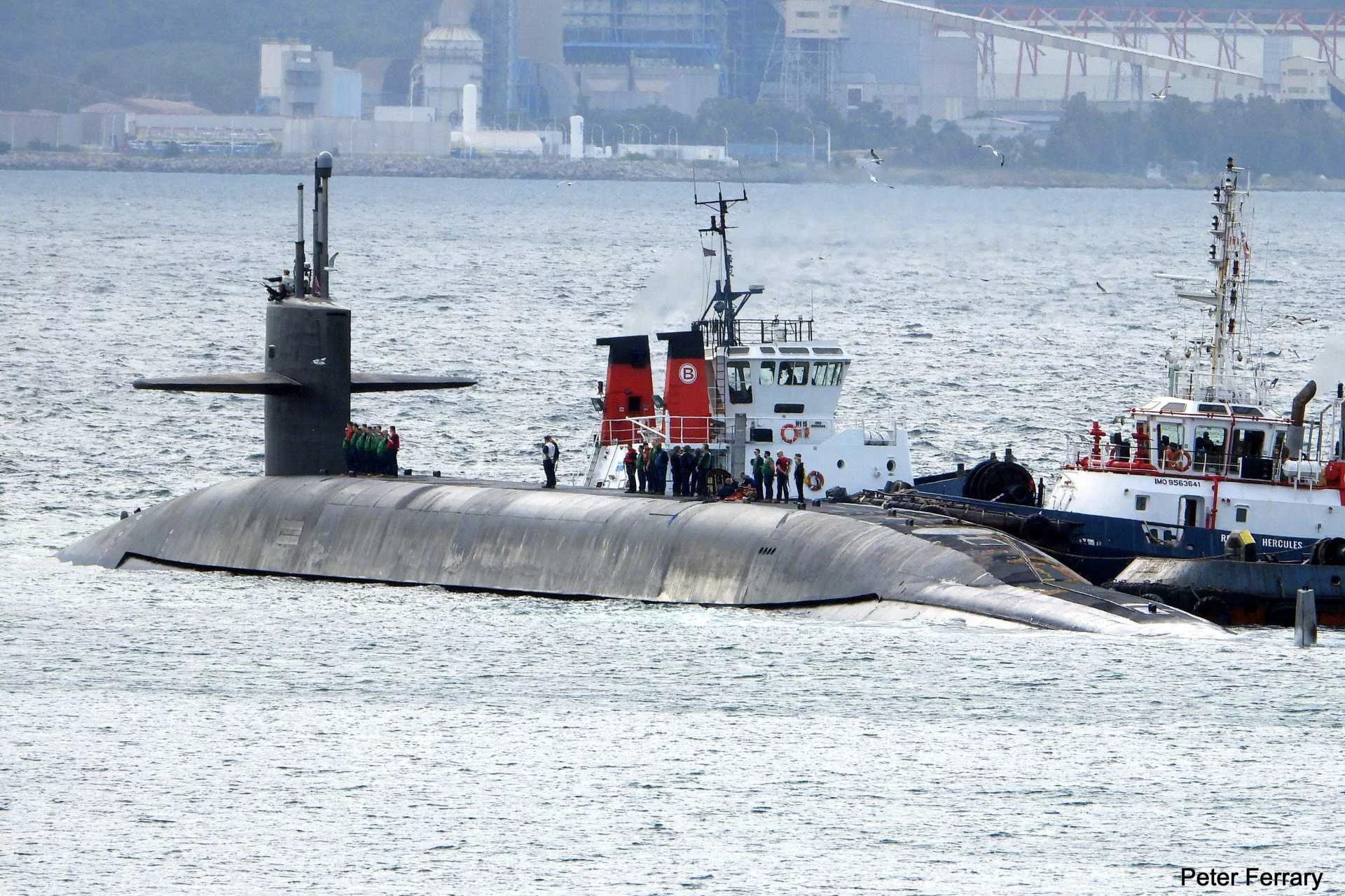
The U.S. Navy has deployed the Ohio-class ballistic missile submarine USS Alaska through the Strait of Gibraltar in a rare public movement of an operational nuclear deterrent asset. Reported on May 10, 2026, this arrival coincides with an escalating confrontation with Iran over maritime access and uranium enrichment negotiations. The highly visible transit, reinforced by Royal Marines security and strict exclusion measures at Gibraltar’s South Mole, signals a deliberate show of strategic resolve as Washington shifts from diplomatic pressure toward a reinforced nuclear deterrence posture in the Atlantic-Mediterranean corridor.

USS Alaska carries up to 20 Trident II D5 missiles and represents a critical component of the U.S. nuclear triad, typically designed for stealth rather than public observation in maritime chokepoints. Its appearance in Gibraltar carries significant operational meaning, highlighting a shift toward visible strategic signaling as the United States and allied partners prepare for potential escalation linked to Strait of Hormuz security and regional maritime instability. This Ohio-class submarine deployment serves as a calibrated response to the current risk of wider confrontation with Iran following the rejection of nuclear ceasefire proposals.

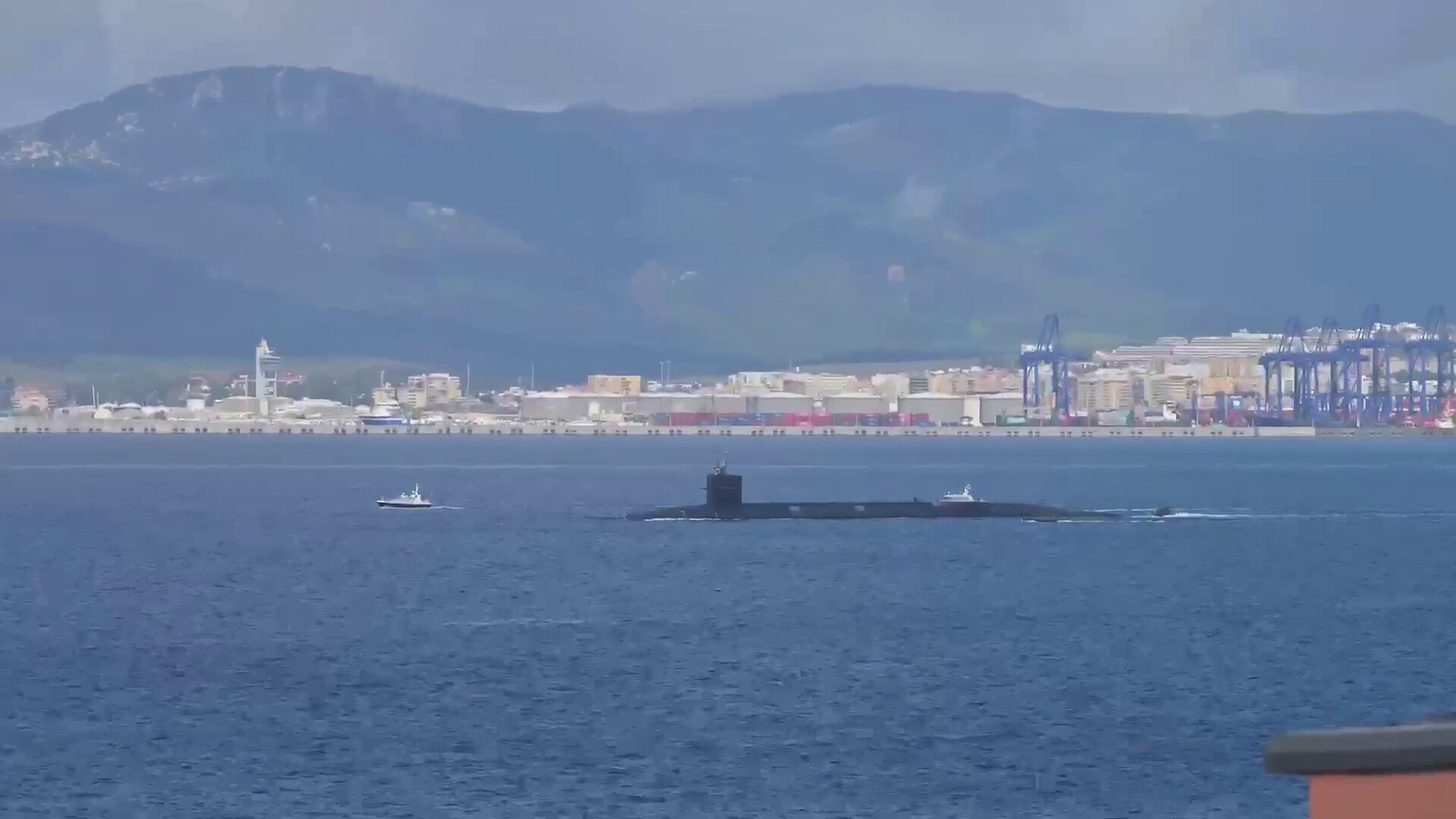
On May 10, 2026, Peter Ferrary spotted the Ohio-class ballistic missile submarine USS Alaska (SSBN-732) entering Gibraltar under escort from Gibraltar Squadron patrol craft, Gibraltar Defence Police units, and Royal Marines fleet protection detachments, marking one of the rare publicly visible deployments of an operational U.S strategic nuclear submarine in the Atlantic-Mediterranean corridor. The submarine was photographed entering the Strait of Gibraltar before docking at South Mole naval facilities under a 200-meter exclusion zone activated immediately after arrival. According to Old Submariner, the Gibraltar stop marked only the third publicly observed US Ohio-class submarine visit to Gibraltar in approximately 25 years.

RAF transport aircraft reportedly delivered additional Royal Marines personnel to Gibraltar before the submarine entered port, indicating a pre-arranged force protection deployment associated with strategic nuclear asset handling. British authorities refused to disclose the submarine’s mission or onward route, but the vessel was rapidly identified as USS Alaska, a Trident-capable SSBN assigned to Submarine Squadron 20 at Naval Submarine Base Kings Bay, Georgia. The deployment coincided directly with President Donald Trump’s rejection of Iran’s ceasefire and nuclear counter-proposal over uranium enrichment, sanctions relief, and maritime access through the Strait of Hormuz, shifting the interpretation of the deployment by Mario Nawfal toward strategic deterrence signaling rather than routine transit activity.

Gibraltar Chronicle and GBC News confirmed the arrival, saying that the USS Alaska entered Gibraltar escorted through the strait by local security vessels before beginning harbor maneuvering operations with assistance from two tugboats due to the submarine’s 170.7-meter length and 18,750-ton submerged displacement. Royal Marines established security positions around South Mole access routes while Gibraltar Defence Police units enforced the maritime exclusion zone surrounding the berth. Such procedures are consistent with handling nuclear-powered submarines carrying strategic missile capability inside geographically constrained ports exposed to dense commercial maritime traffic and civilian observation.

The deployment profile differed from standard attack submarine port calls because ballistic missile submarines are normally routed through ports with minimal public visibility. USS Alaska’s appearance, therefore, represented a departure from standard SSBN operational discretion, particularly during active confrontation with Iran around the Strait of Hormuz maritime security. The USS Alaska was commissioned on January 25, 1986, after construction by General Dynamics Electric Boat in Groton, Connecticut, under a procurement contract awarded on February 27, 1978.

The submarine entered service as part of the first generation of Ohio-class ballistic missile submarines, initially configured for Trident I C4 missiles, before later conversion to Trident II D5 during modernization work completed after 2000. Between 2006 and 2009, the USS Alaska completed a 27-month engineered refueling overhaul at Norfolk Naval Shipyard involving replacement of reactor fuel, modernization of navigation and combat systems, integration of Trident II D5 launch capability, and upgrades enabling deployment of Mk-48 ADCAP heavyweight torpedoes.

The submarine operates with a single S8G pressurized-water nuclear reactor driving two geared steam turbines connected to one shaft rated at roughly 60,000 shaft horsepower, while submerged speed reportedly exceeds 20 knots. USS Alaska currently carries twenty Trident II D5 nuclear ballistic missiles following New START launcher reductions implemented in 2017, alongside four 533 mm torpedo tubes equipped for Mk-48 torpedoes. The U.S Navy currently operates 14 Ohio-class SSBNs and four converted Ohio-class SSGNs, with the ballistic missile submarine force forming the sea-based component of the American nuclear triad alongside Minuteman III intercontinental ballistic missiles and strategic bomber forces.

Ohio-class SSBNs are divided between Naval Base Kitsap at Bangor, Washington, and Naval Submarine Base Kings Bay, Georgia, enabling continuous deterrent patrol coverage across the Pacific and Atlantic theaters. Standard patrol cycles generally last between 70 and 90 days, with submarines remaining submerged for most of the deployment while relying on secure strategic command networks connected to U.S Strategic Command infrastructure. The Ohio-class force was designed around survivability and concealment rather than visible naval presence, using acoustic quieting measures and operational patrol patterns intended to complicate detection by adversary anti-submarine warfare assets.

Public appearance of USS Alaska, therefore, carried greater strategic meaning than deployment of conventional naval forces because these SSBNs represent one of the most survivable nuclear retaliation assets maintained by the United States. On May 11, 2026, President Donald Trump rejected Iran’s response to the American ceasefire and nuclear framework proposal after Tehran transmitted its counteroffer through Pakistani intermediaries during peace negotiations. Iran demanded guarantees against renewed attacks, sanctions removal, compensation for wartime damage, and retention of part of its uranium enrichment capability.

Tehran also refuses the dismantlement of its enrichment facilities and opposes the long-term suspension conditions proposed by Washington. The U.S position continued requiring restrictions on uranium enrichment activity, external control or removal of highly enriched uranium stockpiles, and restoration of unrestricted maritime transit through the Strait of Hormuz. Israeli Prime Minister Benjamin Netanyahu simultaneously insisted that highly enriched uranium stockpiles and enrichment infrastructure would still need to be removed before the conflict could be considered resolved.

The visible arrival of USS Alaska in Gibraltar during this escalation cycle increased the probability that the submarine movement formed part of a broader deterrence posture directed toward Tehran. The deployment occurred during severe maritime instability in and around the Strait of Hormuz, where Iran and the United States were simultaneously attempting to impose competing transit controls over one of the world’s most critical energy shipping corridors. Tehran demanded that commercial shipping coordinate movements with Iranian military authorities before entering the strait and imposed financial transit conditions on selected vessels, while U.S naval forces continued blockade operations targeting Iranian ports and maritime supply activity.

Drone incidents over Kuwait, Qatar, the UAE, and northern Iraq increased concerns regarding ceasefire durability, particularly after a vessel near Qatar reportedly suffered damage from an unidentified projectile. Earlier American efforts to reopen maritime traffic through Project Freedom had collapsed after limited operational success, as Saudi Arabia reportedly refused permission for U.S forces to use national bases and airspace during this operation. Within that environment, the movement of a U.S. strategic ballistic missile submarine through Gibraltar carried implications extending beyond naval transit.

Gibraltar remains one of NATO’s most strategically significant maritime chokepoints because the territory controls the only direct maritime access route between the Atlantic Ocean and the Mediterranean Sea through the fourteen-kilometer-wide Strait of Gibraltar. More than 100,000 vessels transit the strait annually, including commercial energy shipping, NATO naval units, Russian warships, and submarines moving between Atlantic and Mediterranean operating zones. Gibraltar’s position allows submarines departing Kings Bay or other East Coast bases to transition rapidly toward the Eastern Mediterranean, Levant, North Africa, and Suez Canal approaches.

South Mole naval facilities, RAF Gibraltar infrastructure, and Gibraltar Squadron assets provide secure berthing, logistics handling, communications support, and force protection capabilities for visiting U.S. nuclear-powered submarines operating between Atlantic and Mediterranean theaters. Because Gibraltar transits are immediately observable from civilian areas and dense commercial shipping lanes, any public movement of a ballistic missile submarine there inevitably acquires geopolitical significance beyond logistical requirements.

Ballistic missile submarines, or SSBNs, are designed primarily for strategic nuclear deterrence through survivable second-strike capability. Modern SSBNs operated by the United States, Russia, China, France, and the United Kingdom carry submarine-launched ballistic missiles capable of intercontinental strikes using MIRV-equipped nuclear warheads targeting multiple objectives independently. Operational doctrine depends on concealment, long-duration submerged patrols, secure strategic communications, and extremely low acoustic signatures intended to prevent adversaries from locating deployed submarines during crises.

By contrast, cruise missile submarines, or SSGNs, support conventional precision strike operations, intelligence collection, maritime strike missions, and special operations deployment using cruise missiles rather than strategic ballistic weapons. Because survivability and concealment are central to SSBN effectiveness, deliberate public exposure of an operational ballistic missile submarine during an active geopolitical confrontation represents an unusual decision within normal deterrence doctrine. Several operational explanations remain possible regarding USS Alaska’s Gibraltar stop, although the timing and visibility of the movement narrowed interpretation toward strategic signaling rather than routine support activity alone.

One explanation involves logistics replenishment, crew rotation, secure communications coordination, or classified maintenance activity before continued patrol operations in Atlantic or Mediterranean operating areas. Another centers on calibrated deterrence signaling associated with U.S Strategic Command posture during active confrontation involving Iran, maritime access restrictions, and nuclear negotiations. The deployment also coincided with British and French preparations for multinational maritime security coordination involving more than forty countries focused on restoring shipping flows through the Strait of Hormuz after previous corridor operations had failed.

The choice to move an SSBN rather than a carrier strike group or bomber formation shifted the emphasis away from immediate conventional strike operations toward a strategic retaliation capability tied directly to the U.S. sea-based nuclear triad. During the Cold War, U.S ballistic missile submarine doctrine centered on concealment, survivability, and uninterrupted deterrent patrol operations rather than deliberate public visibility involving operational SSBNs. Strategic crises such as the Cuban Missile Crisis in 1962 and the Able Archer 83 confrontation demonstrated how adjustments to nuclear posture, submarine deployments, and readiness conditions formed part of escalation management mechanisms.

Contemporary deterrence practices increasingly differ from that model because modern strategic communication now incorporates controlled public exposure of nuclear-capable assets through monitored maritime transits and visible deployments. Previous Ohio-class deployments linked to deterrence operations near South Korea in 2023, strategic bomber missions tied to North Korea messaging, and the Gibraltar appearance of USS Alaska indicate a broader shift toward integrating strategic nuclear forces into visible geopolitical signaling during active regional crises. Within that context, the movement of USS Alaska through Gibraltar might represent a calibrated strategic deployment inserted into an active confrontation involving Iran, maritime access control, nuclear negotiations, and regional military escalation.

2 Likes

US Navy nuclear submarine departs Gibraltar following brief stopover

A US Navy submarine USS Alaska has departed Gibraltar following a brief stopover at the British Overseas Territory. Gibraltar is a regular docking point for military and naval ships due to its strategic location at the entrance to the Mediterranean.

RUMORS FLYING THAT TRUMP WILL ATTACK IRAN WITHIN DAYS - CONTROLLED ECONOMIC DESTRUCTION

Iran's 'Finger on the Trigger' as War Enters Most DANGEROUS Phase | Mohammad Marandi

Mohammad Marandi joins to discuss breaking news of imminent war ahead as Trump meets today to determine the US's next strike move and Iran prepares an unthinkable response that will accelerate the massive global changes rocking the US-led unipolar order. - D.H.

I actually think Netanyahu is telling the truth (rare indeed!) this time in that it was pre-planned. Looks like self-inflicted sabotage for the destruction of the current counterfeit-Israel and occupied territory followed by the creation of a "Greater Israel" with control of the whole Middle East under the NWO "Board of Peace" with their headquarters in Jerusalem. A Rothschild playbook that requires a WWIII.

Details of the Explosion in an Israeli Defence Facility

Article: Mystery Blast In Israeli Defence Facility? Ex-CIA Analyst Questions Tehran’s ‘Planned Test’ Claim Mystery Blast In Israeli Defence Facility? Ex-CIA Analyst Questions Tehran’s ‘Planned Test’ Claim | World News - Iran

Trump, like his antiChrist predecessor Adolf Hitler, has the same goal, but he is working it from a different angle. Whilst Hitler, in cahoots with Rothschild (playing both sides), sought and succeeded in the creation of the counterfeit State of Israel; Trump (also in cahoots with Rothschild) seeks to destroy it in order to create a newer version aka a “Greater Israel”. Two different sides (One says he hates the jews / The other says he loves the jews) of the same satanic coin. Trump is Hitler 2.0 and more. Through his actions and rhetoric, Trump is deliberately inciting hatred for the jews. and counterfeit-Israel. The goal is for a “Greater Israel” with the “Board of Peace” headquartered in Jerusalem to rule over the entire Middle East for a NWO. It’s so obvious. All of the pro-Hitler voices saying Hitler was a hero, are being fooled. THEY are satanists: Hitler was a satanist. Trump is a satanist. They come from the same playbook. Hitler sacrificed the Ashkenazi-jews in WWII and in WWIII, Trump et al seek to sacrifice the current nation of Israel in the Middle East for something "greater" for their evil Rothschild satanic plans.

Matthew 7:15 Beware of false prophets, which come to you in sheep's clothing, but inwardly they are ravening wolves.
7:16 Ye shall know them by their fruits. Do men gather grapes of thorns, or figs of thistles?
7:17 Even so every good tree bringeth forth good fruit; but a corrupt tree bringeth forth evil fruit.
7:18 A good tree cannot bring forth evil fruit, neither [can] a corrupt tree bring forth good fruit.
7:19 Every tree that bringeth not forth good fruit is hewn down, and cast into The Fire.
7:20 Wherefore by their fruits ye shall know them.

US-Israel Defence Alliance Poised for Major Expansion Into AI, Cyber and Advanced Weapons

Nima, in his attempt to make sense of madness, makes a good point in saying that Trump et al appear to be provoking Iran. Nima says the provocation is forcing Iran to have their own nuclear weapons. Perhaps, and certainly the provocation is forcing Iran to strike harder and with more force in the Middle East. Larry provides a good summary at the end of the interview in saying we are witnessing a structuring of the NWO.

Here is that interview:

Larry Johnson: The Strait of Hormuz Is a Ticking Time Bomb

Trump reminds me of the Monkeyman that Cord fights in the film The Silent Flute.

Iran May Already Have A Nuclear Weapon – Says Larry Johnson

Guest host Garland Nixon interviews former intelligence analyst Larry Johnson about escalating tensions involving Iran, Israel, and the United States, focusing on reports that Israel is not only urging Washington to abandon negotiations, but is also pressuring the U.S. to assassinate Iran’s lead negotiator. Johnson claims that Iran has withdrawn from talks with the U.S., may leave the nuclear non-proliferation framework, and could potentially conduct a public nuclear test to demonstrate deterrence capabilities, citing information he says came from intelligence sources. The discussion examines the strategic roles of Pakistan, China, and Russia in the region, as well as disputes over the Strait of Hormuz, Israeli military actions, and the prospects for a new Middle East security architecture independent of U.S. influence. The speakers argue that Israeli efforts to weaken Iran have instead strengthened Tehran's regional position and altered the geopolitical balance in the Persian Gulf. - News Report.