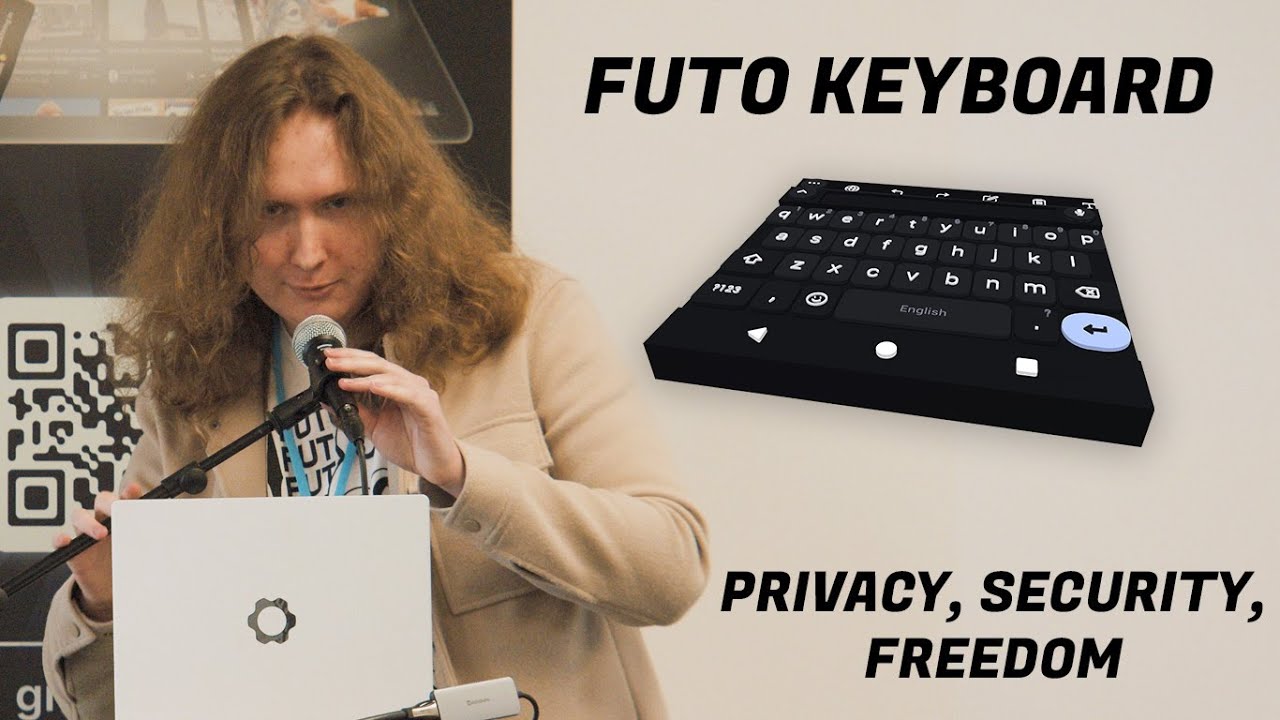
FUTO Keyboard is interesting mainly because it treats the keyboard as a local input device, not as a cloud service.
The strongest privacy point is simple: it is designed to work without Internet access at all. Autocorrect, swipe typing and even voice input can run locally on the phone. Google Play currently says FUTO collects no data and shares no data with third parties. Google Play
That matters more for a keyboard than for most apps, because the keyboard potentially sees almost everything you type: searches, messages, names, addresses, fragments of passwords, private conversations, etc. Android does isolate password fields somewhat, but fundamentally an IME is a highly privileged piece of software.
Compared with something like Gboard, the distinction is architectural rather than simply “Google bad / FUTO good.” Gboard has substantial on-device processing too, and Google provides privacy controls. But Gboard is still network-capable and has mechanisms such as personalization, federated learning and optional improvement features. Google documents that some typing/voice-derived information can participate in those systems depending on settings. Google Support
FUTO instead makes the stronger design choice:
keyboard → local models → text
rather than potentially:
keyboard → local processing + cloud/account/service infrastructure → text
Another advantage is inspectability. FUTO Keyboard is based on Android's LatinIME and publishes its source code, so people can inspect how it works and build it themselves. One caveat: its current FUTO Source First License is source-available, not conventional OSI open-source, because it has restrictions on commercial use. GitHub
In practice
If the built-in keyboard is Gboard or Samsung Keyboard, FUTO gives you a substantially cleaner trust model:
- no Internet permission by design;
- no account required for normal operation;
- offline speech recognition;
- offline swipe/autocorrect;
- no telemetry/data collection according to its Play declaration;
- auditable source.
The trade-off is that Gboard is generally more mature: broader language support, better integrations, more refined prediction and some convenience features. FUTO itself still labels the keyboard as under active development. Google Play
So the real attraction is not merely “a private keyboard.” It is removing the network from the keyboard's threat model altogether. For software that receives nearly every sentence you type, that's a fairly compelling architectural choice.