by cybe and ChatGPT
Research snapshot · 21 October 2026, before the scheduled PHP security release
The PHP incident has the greater potential for widespread, automated compromise. The eMudhra incident has a smaller immediate attack surface but a more persistent trust problem, especially for software that does not receive browser-style security updates.
The surprising finding from the Exa research is just how much obsolete PHP remains on the web.
1. The PHP exposure is enormous
PHP adoption
69.7%
Of websites whose server-side language W3Techs can identify
PHP 5.x / 7.x / 8.0 / 8.1
~48.6%
Estimated share of version-identified PHP sites running upstream end-of-life branches
Sources: W3Techs PHP adoption and version distributions, 13–19 October 2026.
+2
Observed PHP major-version distribution
W3Techs survey, 19 October 2026; rounded values.
0%20%40%60%80%PHP 5PHP 7PHP 8
Within the PHP 8 group, another 21.1% are using PHP 8.0 or 8.1, both outside upstream security support.
This means that nearly half of the observed PHP version population depends on upgrading, third-party extended support, or distribution-maintained backports.
It does not mean half of these sites are exploitable. W3Techs measures technology adoption, not actual reachability of vulnerable execution paths. Its data also cannot count hidden PHP installations, internal applications, containers, or embedded devices reliably.
The second important discovery is that the early advice to disable session.upload_progress is now contradicted by PHP developers and security researchers. Configuration changes are not considered sufficient mitigation for the two critical flaws. Cloudflare is also reporting early attack activity. Tenable technical advisory.
That makes this materially more serious than a routine WordPress-plugin vulnerability.
2. Routers, firewalls, NAS devices — the hidden PHP population
There are confirmed examples of PHP inside network appliances, not merely conventional websites.
| Device family | PHP evidence | Main concern |
|---|---|---|
| pfSense | PHP-based configuration and scripting environment | Firewall management interface |
| OPNsense | PHP application controllers and management framework | Firewall management interface |
| QNAP QTS | Built-in PHP web-server capability | Web applications and stored data |
Sources: Netgate, OPNsense, and QNAP.
QNAP's documentation provides a particularly interesting example:
| QTS firmware | Bundled PHP |
|---|---|
| 4.2.6–4.3.6 | 5.6 |
| 4.4.x | 7.3 |
| 5.0.1 | 7.4 |
| 5.1 | 8.2 |
The manufacturer says that users cannot independently upgrade the built-in PHP version: it requires a firmware update.
These are documented firmware/version combinations, not a count of devices currently online. Nor does the presence of PHP prove the vulnerable functionality is publicly accessible.
Why embedded devices change the forecast
An ordinary website can often update its interpreter through the operating system or hosting provider. An appliance may require a complete vendor firmware release, and the vendor may have discontinued support.
That creates a long-lived population of potentially affected devices.
However, there is no credible internet-wide number yet for routers running PHP2Shell-exploitable code. We cannot derive it from global router counts or W3Techs website statistics.
My expectation is that conventional web hosting will dominate the initial exploit traffic. Embedded devices could become a more persistent target once their actual affected configurations are identified.
3. What will probably happen with PHP2Shell?
The closest useful historical analogue is PHP's CVE-2024-4577, a different remote-code-execution vulnerability.
In June 2024, Akamai observed attacks within 24 hours of disclosure. Attackers attempted deployment of remote-access malware and cryptocurrency miners; ransomware exploitation followed rapidly.
Akamai
That history supports a plausible progression:
First hours — automated reconnaissance
Scanners look for exposed PHP services, known application endpoints and systems responding to emerging exploit probes. Early exploitation has already been reported by Cloudflare, although the scale is not established.
Days 1–3 — opportunistic exploitation
If reliable exploits become public, attackers automate compromise attempts. Web shells, miners, credential theft and botnet enrollment become realistic outcomes.
Days 3–14 — infrastructure abuse
Compromised hosting accounts could be used to serve malware, send phishing messages, steal database credentials or move toward other systems.
Following months — the unsupported long tail
Old web applications and firmware may remain exposed. Criminal operators can continue revisiting systems missed by the initial wave.
This is a forecast, not a documented attack timeline. The important unknown is whether the leaked vulnerability can be converted into a reliable, broadly applicable exploit. If exploitation requires uncommon configurations, the number of compromises could be vastly smaller.
4. A concrete measurement: over one million publicly identifiable old-PHP websites
An independent September 2026 analysis of the HTTP Archive dataset provides an unusually useful cross-check.
HTTP Archive sample — 15.5 million homepages
7,319,064
Detected using PHP
2,198,139
Exposed a PHP version
1,056,527
Exposed an end-of-life PHP version
5,120,925
PHP detected; version hidden
Source: Suff Digital's analysis of HTTP Archive data. These are website homepages, not distinct servers or confirmed vulnerable hosts.
The old-version fraction is remarkably close to W3Techs' independent figure, but both estimates have sampling limitations.
Netcraft's July 2026 survey counted roughly 1.49 billion website names on 14.77 million web-facing computers. That illustrates why multiplying PHP percentages by all website names produces misleading server counts: shared hosting, virtual hosts and CDN infrastructure dominate the relationship.
Netcraft
Interactive PHP compromise simulation
This model deliberately does not pretend that we know the real exploitability rate. It calculates outcomes for a hypothetical population of one million unpatched PHP-powered websites.
Hypothetical successfully compromised websites
10,000
Per 1,000,000 unpatched PHP-powered websites
Actually reachable exploit path
10%
Share for which the discovered bugs can actually be triggered remotely, given the site's configuration and defenses.
Successful attacker conversion
10%
Share of reachable sites eventually compromised during the modeled attack campaign.
Sensitivity experiment, not a forecast or measured rate
Reset
Even small percentages produce substantial numbers at this scale. But they remain mathematical possibilities, not predictions. The measured missing variable is the fraction of real PHP deployments where these two particular vulnerabilities permit reliable code execution.
5. eMudhra: the more subtle long-term risk
The certificate incident is fundamentally different. It doesn't directly compromise servers. It undermines a mechanism used to decide whether a remote server is genuine.
Compromised intermediate keys
8
Six TLS; two code-signing
Legitimate certificates requiring migration
~30,000
After distrust of the related root
Sources:
ctlogs.dev
+1
There are two separate consequences.
First, forged identities. Anyone who recovered the compromised signing keys could produce fake certificates for arbitrary domains, against clients that still trusted those keys. Google reports that no certificates issued through the six affected TLS intermediates appeared in Certificate Transparency before its emergency block, protecting clients that enforce CT. But non-browser TLS clients often do not enforce CT.
blog.google
Second, legitimate certificate breakage. Removing trust in the affected root also rejects legitimate certificates issued through other, uncompromised intermediates under that root. eMudhra estimated that roughly 30,000 certificates need migration, with 97% originally issued through ACME.
Bugzilla
The five certificate scenarios
| Scenario | Plausibility | Consequence |
|---|---|---|
| Modern browser visiting HTTPS sites | Low residual risk | Emergency browser protections already deployed |
| Old Python, Java or OpenSSL client with stale trust | Realistic continuing exposure | Forged HTTPS identity may be accepted |
| Compromised router intercepts requests from old clients | Plausible targeted attack | Traffic interception or manipulated API responses |
| Certificates not migrated before root distrust | Likely some operational disruption | TLS failures and service outages |
| Widespread historical interception since April 2025 | Possible but unverified | Past communications may have been compromised |
The TLS client problem is concrete, not hypothetical.
Oracle documents that standard JSSE revocation checking is disabled by default in common configurations. OpenSSL likewise leaves its CRL and OCSP verification flags off by default. A certificate can therefore be marked revoked without every application actually checking that fact.
Oracle Docs
+1
This is why Google, Mozilla, Cloudflare and multiple language ecosystems have been distributing trust-store or explicit key-blocking updates rather than relying solely on ordinary certificate revocation.
A simple outage sensitivity model
For 30,000 certificates needing replacement:
| Migration failure rate | Certificates still problematic |
|---|---|
| 0.5% | 150 |
| 5% | 1,500 |
| 20% | 6,000 |
These percentages are hypothetical. One certificate may protect multiple services, and not every failed migration immediately causes an outage. Still, the most visible near-term consequence of eMudhra may be broken legitimate HTTPS services rather than successful attacks.
Chrome expects the root-store removal to reach its users around 27 October 2026.
blog.google
6. The combined scenario — where things get especially interesting
Consider a scenario in which the incidents interact.
PHP exploitation compromises an internet-facing appliance
Assumes its PHP runtime is affected and remotely exploitable
Attacker gains control of routing, DNS or a reverse proxy
Requires elevated privileges or suitable network position
Attacker presents an eMudhra-signed fraudulent TLS certificate
Possible using one of the recoverable CA keys
An outdated HTTPS client accepts the false identity
Requires stale trust and insufficient revocation or CT enforcement
Possible credential theft, API manipulation or malicious software delivery
This is a technically plausible threat-chain simulation, not a reported incident.
Notice the important dependency: a weak CA key alone does not put an attacker in the network path. But a compromised network appliance can provide that missing position. Likewise, the attacker needs a victim TLS client that still accepts the compromised chain.
The two incidents could therefore amplify each other without sharing a common root cause.
7. My forecast
| Outcome over the next 30 days | Assessment |
|---|---|
| Increased automated PHP vulnerability scanning | High confidence |
| Working PHP2Shell exploits incorporated into criminal tooling | Moderate to high, conditional on reliable exploit development |
| Compromises of forgotten PHP servers | Moderate to high, scale unknown |
| Large-scale takeover of consumer routers specifically via PHP2Shell | Low confidence; insufficient exposure data |
| Further eMudhra-related trust-store updates | High confidence |
| Certificate migration failures and compatibility issues | Moderate to high |
| Mass HTTPS interception using compromised eMudhra keys | Low confidence; no evidence establishing scale |
| Long-lived vulnerable embedded TLS clients | High confidence |
The most important distinction is between scale of technical exposure and scale of realized compromise.
PHP has both a vast deployment population and a known history of rapid criminal exploitation. eMudhra has a cryptographically catastrophic defect, but exploitation additionally requires a suitable client and interception position. Its long tail may last much longer, especially inside embedded products with frozen trust stores.
8. The larger lesson
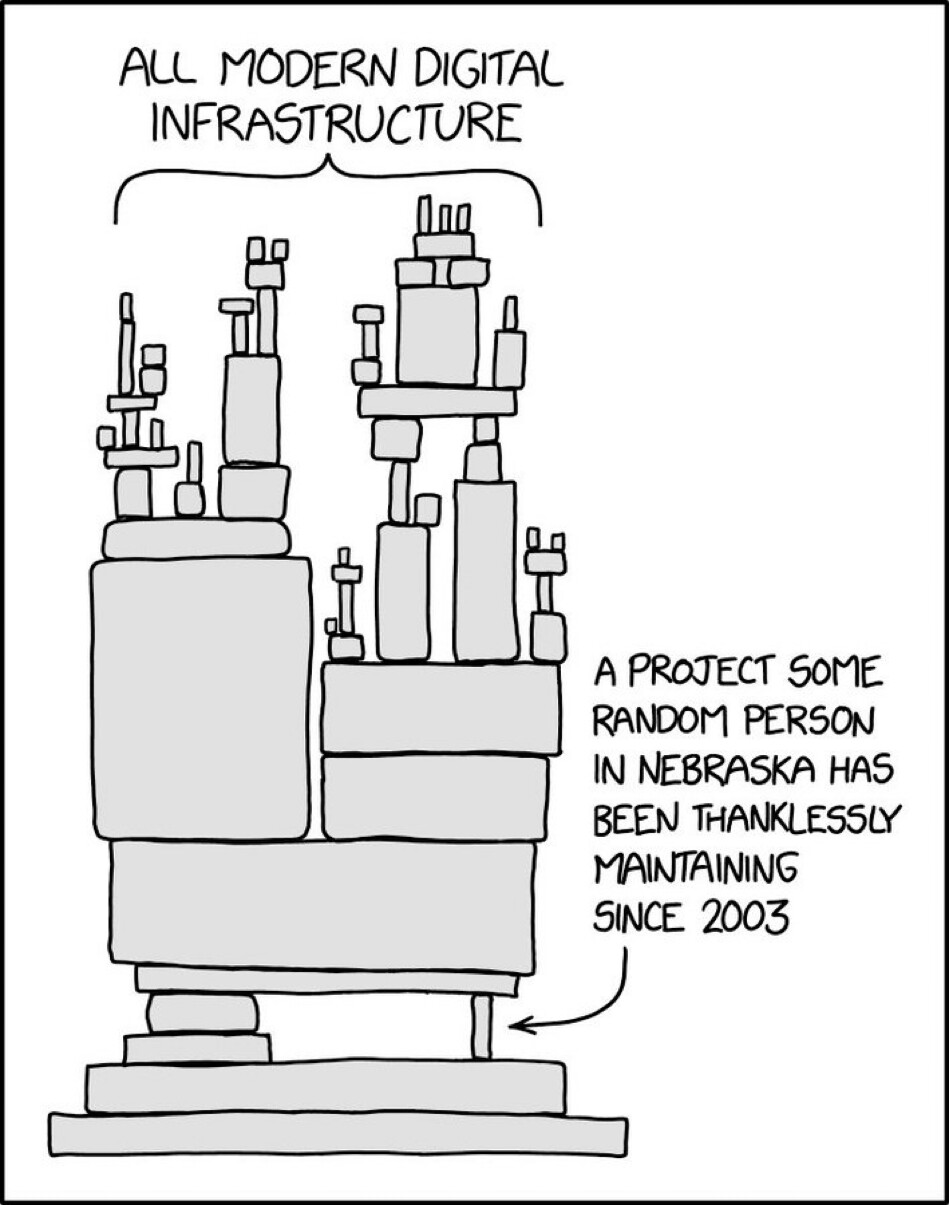
Cloudflare's incident analysis highlights what I consider the most significant architectural issue: a static collection of trusted certificate authorities is insufficient without a reliable mechanism for withdrawing trust quickly.
Cloudflare Blog
That suggests two different systemic reforms:
- For PHP: make runtime inventory, isolation, supported-version enforcement and automatic security patching properties of the hosting platform, rather than responsibilities delegated to individual website owners.
- For TLS: treat revocation and emergency distrust as mandatory, testable parts of certificate validation across browsers, libraries, containers and appliances.
Across 16 Exa searches, I examined 120 returned candidate results, including duplicates, and cross-checked the principal findings against vendor, browser, government, and telemetry sources. No reliable global count of affected routers or stale certificate-validation clients emerged.
For your infrastructure, the immediately relevant distinction is that PHP execution on Zetoo and the mail server is an inbound attack surface, while certificate validation in tools such as curl, Python, Go, and containerized services is an outbound trust surface. Both need auditing, but they require different controls.
The next useful research checkpoint is the official PHP disclosure at 17:00 Finnish time today, when we should learn whether the feared general-purpose attack paths are real. I can monitor that release and subsequent exploitation telemetry and alert you if the outlook changes materially.